

Why Choose Us
1

One-stop Solution
We're committed to quality and concrete actions.That means we always deliver solutions in a professional and practical way.
2
Custom Service
Quick and accurate quotation;Timely and effective follow-up;Quality assurance and service.
3
Professional Team
We have twenty years of experience in auto parts,and have built a professional work team.
4
24H Online Service
You can contact us to inquire about pre-sales,sales, and after-sales services,and we will give you a very satisfactoryWe are at your service online 24 hours a day.
What Is Mazda M3 M6 Cx5 2015 2.0l Iginition Coil Pe7w-18-100 Pe20-18-100
An ignition coil is a vital component of a vehicle's ignition system. It is responsible for converting the low voltage from the battery into the high voltage needed to produce sparks at the spark plugs. The ignition coil acts as a transformer, utilizing electromagnetic induction to generate the high voltage required for efficient combustion in the engine.
-

MAZDA M3 GASOLINE PUMP FILTER ZJ20-13-ZEL
Applicable Engine Models :MAZDA M3 . OE Number: ZJ20-13-ZEL . Factory No : ZJ20-13-ZEL . MAZDA M3 GASOLINE PUMP FILTER . Add to Inquiry -
MAZDA M3 SENSOR;OIL TANK Z605-60-960
Applicable Engine Models :MAZDA M3 . OE Number: Z605-60-960 . Factory No :Z605-60-960 . MAZDA M3 SENSOR;OIL TANK . Add to Inquiry -
MAZDA M3 FUEL PUMP Z605-13-35X 5M519H307
Applicable Engine Models :MAZDA M3 . OE Number: Z605-13-35X 5M519H307 . Factory No : Z605-13-35X 5M519H307 . MAZDA M3 FUEL PUMP. Add to Inquiry -
MAZDA M3 WATER TANK COVER LF50-15-205
Applicable Engine Models :MAZDA M3 OE Number: LF50-15-205 Factory No : LF50-15-205 MAZDA M3 WATER TANK COVER Add to Inquiry -
MAZDA M3 RADIATOR WATER TANK LF8B-15-350
Applicable Engine Models :MAZDA M3 OE Number: LF8B-15-350 Factory No : LF8B-15-350 MAZDA M3 RADIATOR WATER TANK Add to Inquiry -
MAZDA M3 FUEL PUMP L3M8-13-350
Applicable Engine Models :MAZDA M3 . OE Number: L3M8-13-350 . Factory No : L3M8-13-350 . MAZDA M3 FUEL PUMP . Add to Inquiry -
MAZDA M6 10 TIE ROD END GS1D-32-290
Applicable Engine Models :MAZDA M6 10 OE Number: GS1D-32-290 Factory No : GS1D-32-290 MAZDA M6 10 TIE ROD END Add to Inquiry -
MAZDA M6 WATER JET GDK1-51-82X
Applicable Engine Models :MAZDA M6 OE Number: GDK1-51-82X Factory No :GDK1-51-82X MAZDA M6 WATER JET Add to Inquiry -
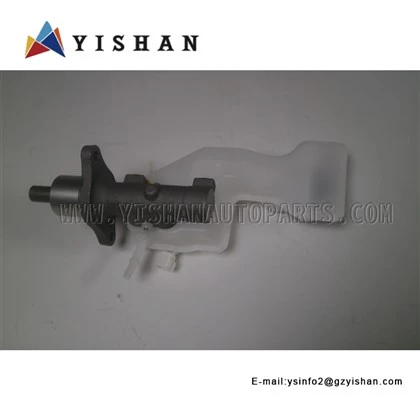
MAZDA M6 BRAKE MASTER CYLINDER GBY8-43-40Z
Applicable Engine Models :MAZDA M6 OE Number: GBY8-43-40Z Factory No : GBY8-43-40Z MAZDA M6 BRAKE MASTER CYLINDER Add to Inquiry -
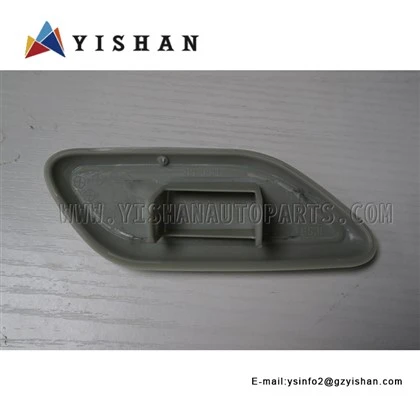
MAZDA M3 WATER JET COVER BS3F-51-8H2
Applicable Engine Models :MAZDA M3 OE Number: BS3F-51-8H2 Factory No : BS3F-51-8H2 MAZDA M3 WATER JET COVER Add to Inquiry -
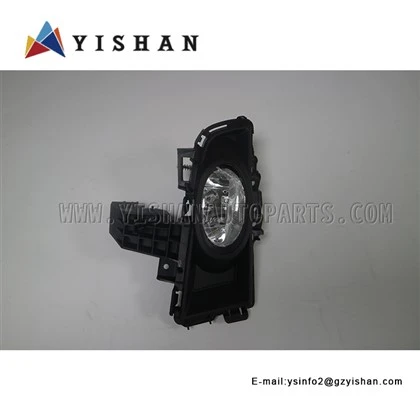
MAZDA M3 BUMPER FOG LAMP BR5J-51-680
Applicable Engine Models :MAZDA M3 OE Number: BR5J-51-680 Factory No : BR5J-51-680 MAZDA M3 BUMPER FOG LAMP Add to Inquiry -
MAZDA M3 BRAKE MASTER CYLINDER BPYS-43-40Z
Applicable Engine Models :MAZDA M3 OE Number: BPYS-43-40Z Factory No : BPYS-43-40Z MAZDA M3 BRAKE MASTER CYLINDER Add to Inquiry



Functioning of an Ignition Coil
The ignition system is a crucial part of a vehicle's engine, initiating combustion. It comprises several components, including the ignition coil, spark plugs, distributor (in older systems), and control module.
The ignition coil plays a pivotal role in the ignition system by generating the high voltage required to produce sparks at the spark plugs. It is typically connected to the vehicle's battery and ignition switch. When the ignition switch is turned on, a low-voltage current flows through the primary winding of the ignition coil.
The ignition coil transforms the low voltage from the battery into a high voltage output through electromagnetic induction. The primary winding creates a magnetic field when the current flows through it. This magnetic field collapses rapidly when the current is interrupted, inducing a high voltage in the coil's secondary winding. The high voltage output from the secondary winding is sent to the distributor (or directly to the spark plugs in newer systems) to create sparks.
The transformation of low voltage to high voltage through induction in the ignition coil is a crucial step in the ignition process. It ensures that the spark plugs receive a high-voltage pulse, which ionizes the air-fuel mixture in the engine cylinders, creating a spark that ignites the mixture and initiates combustion. The ignition coil's ability to generate high-voltage sparks is vital for efficient engine operation and power delivery.
Construction of an Ignition Coil
The ignition coil consists of two primary components: the primary winding and the secondary winding. The primary winding is made of thick wire with relatively few turns. In contrast, the secondary winding is composed of much finer wire with a significantly higher number of turns. The primary winding is connected to the vehicle's electrical system, while the secondary winding generates the high-voltage output.
The core material of the ignition coil plays a crucial role in its construction. It is typically made of a ferromagnetic material such as iron or steel, which helps to intensify the magnetic field generated by the primary winding. The core is often shaped like a hollow cylinder or a stack of laminations to minimize energy losses through magnetic saturation and eddy currents.
The ignition coil features a high-voltage output terminal where the high voltage generated in the secondary winding is delivered. This terminal is typically connected to the distributor (in older systems) or the spark plugs (in newer systems) through high-tension wires. It is designed to withstand the coil's high voltages without electrical leakage.

Types of Ignition Coils
Conventional Ignition Coils: Conventional ignition coils, also known as canister-style coils, have been widely used in older vehicles. They are typically mounted outside the engine and consist of a metal canister housing the primary and secondary windings. These coils are connected to the distributor, which distributes the high voltage to the spark plugs. Conventional ignition coils are relatively simple in design and are known for their durability and reliability.
Distributorless Ignition System (DIS) Coils: With the advancement in ignition technology, distributorless ignition systems (DIS) have become more prevalent. DIS coils are typically mounted directly on the spark plugs or close to the spark plugs, eliminating the need for a distributor. Each coil is responsible for supplying high voltage to a specific spark plug. The DIS system uses sensors to determine the precise timing of spark production for each cylinder. DIS coils offer improved ignition performance and efficiency compared to conventional coils.
Coil-on-Plug (COP) Ignition Coils: Coil-on-plug (COP) ignition coils take the concept of DIS coils a step further. In COP systems, each cylinder has its own ignition coil mounted directly on the spark plug. This configuration eliminates the need for spark plug wires and provides even more precise and efficient ignition. COP ignition coils offer enhanced spark energy and better combustion control, resulting in improved engine performance and reduced emissions.
Precautions for use
If the ignition coil is used improperly, it will cause damage to the ignition coil, so the following points should be paid attention to: prevent the ignition coil from being heated or damp; do not turn on the ignition switch when the engine is not running; check, clean and tighten the circuit connectors frequently to avoid short circuit or Grounding; control engine performance to prevent excessive voltage; spark plugs must not "hang fire" for a long time; moisture on the ignition coil can only be wiped dry with a cloth and must not be baked with fire, otherwise the ignition coil will be damaged.
Product Category
Ignition coils are divided into two types: open magnetic type and closed magnetic type according to the magnetic circuit. The traditional ignition coil is an open-magnetic type. Its iron core is made of silicon steel sheets of about 0.3 mm. The iron core is wound with secondary and primary coils. The closed magnetic type uses an iron core similar to III to wind the primary coil, and the secondary coil is wound around the outside. The magnetic lines of force are formed by the iron core to form a closed magnetic circuit. The advantages of closed-magnetic ignition coils are less magnetic leakage, less energy loss, and smaller size. Therefore, closed-magnetic ignition coils are commonly used in electronic ignition systems.
How Long Do Ignition Coils Last?
Ignition coils generally last 80,000 to 100,000 miles. However, as with most vehicle components, certain conditions like the ones below may cause them to fail sooner.
Incorrect air-fuel ratio
If your fuel-air ratio is out of balance and causing your engine to run too lean or too rich, your spark plugs can develop problems that impact your ignition coils. This is because mixtures with too much air (lean) may wear out spark plugs sooner since they require more voltage to detonate, generate excessive heat, and are more likely to misfire. On the other hand, mixtures that are too heavy on fuel (rich) can cover spark plugs in carbon deposits.
In both situations, ignition coils are forced to work overtime to deliver enough voltage to combust poor air-fuel mixtures or overcome the damage and grime caused by them.
Incorrect spark plug gap
For spark plugs to operate properly, the space between their electrodes must be gapped correctly. Too small of a gap, and the spark generated may be too weak to combust fuel well. Too large of a gap, and the spark may not jump the gap consistently or may force ignition coils to deliver more voltage.
Over time, spark plug gaps naturally widen, so it's important to monitor the health of your spark plugs by paying attention to these six signs your plugs might need to be replaced.
Valve cover leaks
Though COP ignition coils may deliver stronger sparks with more accurate timing than single coil setups, their positioning makes them incredibly susceptible to moisture — and it's no secret that electronics and moisture don't mix well.
In many COP setups, the coil sits directly above the spark plug, which resides inside a tube in the engine's valve cover. Over time, the rubber between the spark plug tube and the valve cover may break down and let oil inside of that tube, fouling spark plugs and ignition coils in the process.
What Are The Symptoms Of A Failing Ignition Coil?
A failed ignition coil can severely damage your engine, so keep an eye out for these five ignition coil failure symptoms.
1. An illuminated check engine light
Fortunately, if your vehicle has a computer running things instead of a distributor, chances are that it'll notice when an ignition coil has gone bad. When it does, it'll illuminate your check engine light so that a professional technician can use an OBD-II scanner to identify the problem.
2. Difficulty starting your engine
Since ignition coils are responsible for delivering electricity to your spark plugs, you may notice that starting your engine is difficult with a failed ignition coil. In fact, if you have a single ignition coil, your vehicle may not start at all due to no spark being delivered to the spark plugs. With COP setups, however, you may have to feel for symptoms of a "dead" cylinder, like jerky or sputtery starts.
3. Misfiring
That feeling of having a "dead" cylinder is called misfiring, and may also occur while driving. If your engine is misfiring, it may run poorly, shake, and vibrate when idling — and jerk or sputter while driving. A bad misfire will also cause your check engine light to flash, indicating a severe issue that needs to be addressed immediately. Misfiring puts incredible strain on engine components, so we recommend getting your vehicle looked at ASAP if you notice any of these symptoms.
4. Less power and reduced fuel efficiency
When spark plugs don't receive enough electricity from the ignition coil, they may fail to spark or do so intermittently — resulting in reduced power output. When this happens, your engine makes up for the lack of power by consuming more fuel, which reduces gas mileage and can foul spark plugs. So watch out for stalling, slow acceleration, and rough idling, since they're all symptoms of a bad ignition coil.
5. Backfiring
If your engine attempts to burn more fuel to compensate for the bad ignition coil, it may also backfire. Backfiring happens when unburnt fuel travels through the exhaust system and detonates. If your engine is backfiring, you may notice loud popping sounds coming from the rear of your vehicle.

Our Factory
We are the sole agent of more than one hundred well-known manufacturers, and hundreds of domestic and world famous auto parts factories awarded us with exclusive distributor.
Our company was established in 1998,after 20 years of hard work ,now we have employees around 750,warehouse area about 80,000 square meters, and we have 13 company branches, which include Beijing, Hangzhou, Nanchang storage center..ect.We have made great achievements in China domestic and global auto parts market.
Cooperating Partner


FAQ
Q: An you drive with a bad ignition coil?
A: If you’re rocking a single ignition coil, you probably won’t be able to start your car, let alone drive it. If you have a COP setup, it may be possible to drive your vehicle with a failed coil, but we advise against it since doing so can be unsafe and damaging to your engine.
Q: What are the symptoms of a bad ignition coil?
A: 8 Signs of a Faulty Ignition Coil
Your Car Guzzles Gas. ...
Your Car Feels Slow. ...
You Hear Spluttering, Coughing, and Banging Noises. ...
Your Car Idles Roughly and Vibrates. ...
Your Car Misfires and Backfires. ...
Your Car Stalls. ...
You Struggle to Start Your Car. ...
The Check Engine Light Is On.
Your Car Guzzles Gas. ...
Your Car Feels Slow. ...
You Hear Spluttering, Coughing, and Banging Noises. ...
Your Car Idles Roughly and Vibrates. ...
Your Car Misfires and Backfires. ...
Your Car Stalls. ...
You Struggle to Start Your Car. ...
The Check Engine Light Is On.
Q: What does the ignition coil do?
A: The purpose of an ignition coil is to convert the low current from a car battery into enough power to ignite the fuel and start the engine. When there is a problem with an ignition coil, it will cause a range of mechanical and performance issues.
Q: How much does it cost to replace ignition coil?
A: For standard vehicles with conventional ignition coils, replacing a single ignition coil can range from $100 to $300. However, for vehicles equipped with more advanced ignition systems like coil-on-plug (COP) or distributorless ignition system (DIS) coils, the cost may be higher, ranging from $200 to $600 per coil.
Q: What happens to car when ignition coil goes bad?
A: If an ignition coil is not working properly, your engine will likely misfire. A misfiring engine results in a jerking or sputtering feel when you are moving at normal speeds. When you stop, a misfire from a bad ignition coil may cause your vehicle to run roughly, vibrate or shake.
Q: Can you fix a bad ignition coil?
A: Low and medium voltage coils which have been damaged can be repaired, refurbished or replaced. Repairing involves fixing the issue without removing the coil from the core.
Q: How do I know if my spark plug or ignition coil is bad?
A: You'll get a misfire on any cylinder that has one or both that's bad, you can swap the suspect coil or spark plug with a cylinder that is not misfiring and see if the misfire travels to that cylinder. If it travels with the coil, it's the coil, if it travels with the plug, it's the plug.
Q: How many coils does a car have?
A: The compact (or multi-outlet) ignition coil provides one coil per pair of cylinders. E.g. two coils for 4-cylinder engines, three coils for 6-cylinder engines and 4 for 8-cylinder engines and so on.
Q: Should I replace all ignition coils or just the bad one?
A: While it's possible to replace only the faulty coil, it's recommended to replace all coils if they are nearing the end of their lifespan. This helps prevent repeat failures and ensures balanced performance.
Q: Can bad spark plugs cause coil failure?
A: As spark plugs wear down, the gap in each spark plug is fired is widened meaning the coil needs to provide a higher voltage in order to bridge the gap. This additional strain on the ignition coil may cause voltage overload leading to overheating and eventually failure.
Q: Can a bad coil drain your battery?
A: A bad ignition coil will not drain your battery and this is why. Your ignition coil does not receive power until you turn your key on. So the only way a bad ignition coil could drain your battery is if another component failed and is still feeding it power when your car is shut off, or somebody wired something wrong.
Q: Can a bad coil ruin a spark plug?
A: Certainly. If the plug isn't sparking when it should, then the unburnt fuel washing over it will cause wet fouling, which will make it harder for the plug to spark when it does finally get a high tension burst of energy from the coil.
Q: What is the easiest way to check an ignition coil?
A: To test for voltage output, connect a spark tester to the high-tension output terminal of the ignition coil. Then, crank the engine and observe the spark tester. If the spark is strong and consistent, the ignition coil is functioning correctly. However, if there's no spark or a weak spark, the ignition coil is faulty.
Q: What is the code for a coil on a car?
A: Code P0351 is defined as “Ignition Coil 'A' Primary/Secondary Circuit Malfunction.” It's an OBD-II diagnostic trouble code (DTC) that indicates a fault with ignition coil 'A' (a problem with the coil on cylinder #1 or its circuit).
Q: Do you have to disconnect battery to change ignition coil?
A: You can replace a failing ignition coil fairly easily at home, but remember that you're dealing with high voltages so must disconnect your battery before you start.
Q: Do you have to replace all 4 ignition coils at once?
A: It's not always necessary to replace all four ignition coils at once. Typically, if one coil fails, it's recommended to replace the faulty one as soon as possible to prevent further damage and ensure the engine runs smoothly. However, in certain scenarios, it may be wise to replace all four ignition coils at once.
Q: How can you diagnose a bad coil pack?
A: So you know what to look out for, here are six common bad ignition coil symptoms:
Loss of Power. One of the first symptoms you might notice in the case of a defective ignition coil is loss of power.
Poor Acceleration and Jerking.
Engine Misfire.
Backfiring.
Hard Start and Vehicle Stalling.
Illuminated Check Engine Light.
Loss of Power. One of the first symptoms you might notice in the case of a defective ignition coil is loss of power.
Poor Acceleration and Jerking.
Engine Misfire.
Backfiring.
Hard Start and Vehicle Stalling.
Illuminated Check Engine Light.
Q: How much does it cost to fix faulty spark plugs and ignition coils?
A: Since newer vehicles have an ignition coil for each spark plug, replacing them will take longer and increase labor costs. An ignition coil pack can cost around $150 – $300. Add labor costs of about $100 – $150 to your coil pack replacement cost, and the service bill can be as high as $450.
Q: Why would ignition coils need to be replaced?
A: If you notice that your car is misfiring or stalling, it could be an indicator of a bad ignition coil. Other symptoms include rough idle, misfire during acceleration, and hard start. This part may stop working correctly if a vehicle has bad spark plugs or plug wires, or if there is an overload with the voltage.
Q: What tools do you need to change ignition coil?
A: You'll need a ratchet set, a repair manual, a torque wrench, and safety glasses to replace an ignition coil. To replace the coil, disconnect its electrical connector and remove its retaining fastener. Each vehicle is different, so be sure to follow vehicle-specific repair manuals or databases.
As one of the most professional mazda 3 mazda 6 parts manufacturers and suppliers in China, we bring here high quality mazda 3 mazda 6 parts with low price. Welcome to contact our factory for wholesale and OEM services.
